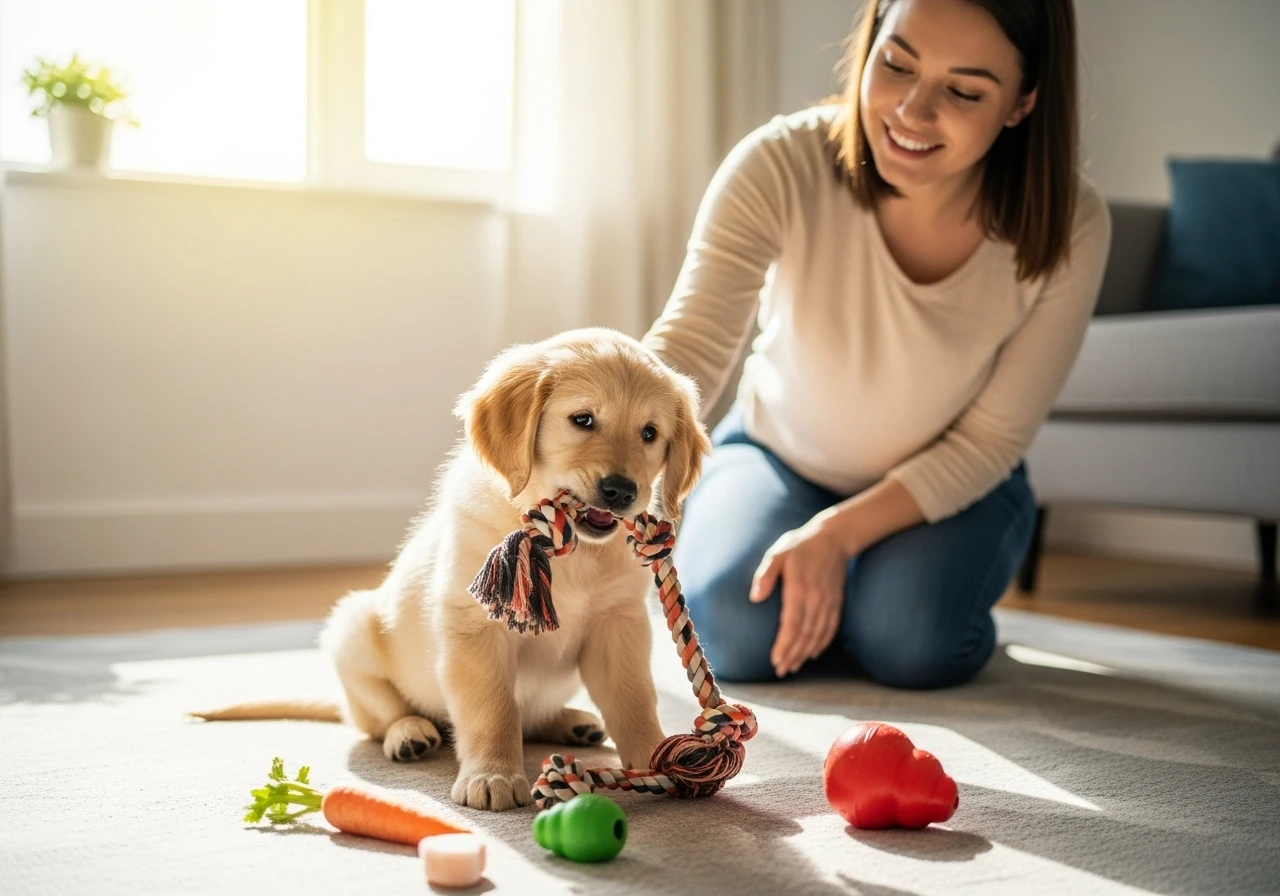
Puppy biting is a natural part of growing up—but when those tiny teeth turn painful or aggressive, it’s time to guide your puppy toward better behavior. Whether you’re a new pet owner in the UK, an Aussie family with a fresh pup, or a U.S. household dealing with teething madness, this guide offers gentle, proven methods to curb biting habits early.
Puppies bite for many reasons: teething, playfulness, boundary testing, or stress. Our 10-step approach uses kind, reward-based methods aligned with expert advice from RSPCA, AVMA, and licensed trainers.
Why Do Puppies Bite
Quick Answer:
Biting helps puppies explore their world, relieve teething pain, and engage in play. But without guidance, it can become a long-term problem.
Common reasons puppies bite:
- Teething discomfort (especially around 3–6 months)
- Exploration and play behavior
- Lack of bite inhibition training
- Overstimulation or frustration
According to the RSPCA: “Biting is normal in puppy development, but early training ensures it doesn’t become a lifelong issue.”
UK pet owners should also note that under the UK Animal Welfare Act 2006, ensuring proper behavioral training is part of your legal responsibility. In Australia and the US, similar animal care codes promote early socialization and humane training methods.
Use the “Yelp” Technique
In Short:
Mimic how puppies communicate by using a high-pitched sound when bitten. Follow up by withdrawing attention briefly.
This method replicates how littermates teach each other not to bite too hard. When your pup bites, let out a quick “Ouch!” in a high tone, then walk away for 10–15 seconds. Done consistently, this teaches bite inhibition—how hard is too hard.
Benefits:
- Simple and effective
- Communicates clearly in dog language
- Stops play without punishment
Trainer Tip (UK): “Many pups in my London classes respond well to this paired with redirection. It’s a great start for first-time dog owners,” says Claire H., certified UK dog behaviorist.
Redirect to a Chew Toy
In Short
Replace your hand or clothes with a chew-safe toy every time your puppy bites.
Redirection is a cornerstone of modern training. Puppies are learning what’s okay to chew. Offer a variety of toys—rubber chews, rope toys, or frozen teething rings—to satisfy their urges.
UK/AU Tip: Many vets recommend Kong toys filled with frozen peanut butter as safe chewing alternatives.
Quick List of Ideal Toys:
- Kong Puppy
- Nylabone Teething Rings
- Rope toys
- Frozen carrot or cloth
Avoid: Human hands, feet, and loose clothing as tug objects.
According to the AVMA, “Redirection not only preserves trust but fosters positive chewing habits.”
Don’t Play with Bare Hands
In Short:
Avoid letting your puppy associate your hands with toys or rough play.
Many owners unintentionally encourage biting by using their hands or fingers during play. This leads puppies to believe hands are fair game, making it harder to stop biting later.
What to do instead:
- Use tug ropes, plush toys, or balls
- Reserve hands for petting, not roughhousing
- End play sessions if biting escalates
Expert Insight: “In my Melbourne clinic, we often see adolescent dogs that nip because they were hand-played too much as pups,” says Dr. Jane Ford, AU-certified animal behaviorist.
Be Consistent with Commands
In Short:
Pick one command like “Gentle” or “No bite” and use it every time biting happens.
Consistency helps your puppy make associations faster. Whether you live in the UK, US, or AU, using one clear cue will ensure all family members give the same message.
Pro Tips:
- Say it in a calm, neutral tone
- Pair it with a redirect (e.g., chew toy)
- Avoid shouting or multiple commands
According to GOV.UK’s Canine Welfare Guide: “Consistency in cues and training routines prevents confusion and supports behavioral learning.”
Provide Plenty of Mental Stimulation
In Short:
A tired brain = a well-behaved pup. Keep them engaged to reduce biting.
Puppies often bite because they’re bored. If they’re not challenged mentally, they’ll find their own fun—which may involve your ankles. Mental stimulation is as important as physical exercise.
Great ideas for engagement:
- Puzzle feeders
- Training sessions (sit, stay, down)
- Hide-and-seek games
- Snuffle mats
UK Note: The Blue Cross recommends 5–10 minutes of daily training games as part of bite control and impulse management
Socialize Your Puppy Early
In Short:
Proper socialization helps puppies learn bite boundaries from their peers.
When puppies interact with other dogs, they learn what’s acceptable. Biting too hard during play results in play stopping—just like when you walk away.
Best social settings:
- Puppy training classes
- Controlled puppy playgroups
- Leashed walks in dog-friendly parks
UK/AU Tip: RSPCA and Dogs Trust UK often run local puppy sessions. In Australia, Petbarn Puppy School is a great place to start.
Trainer Quote (US): “Social puppies are calmer puppies. They burn energy, learn manners, and bite less,” says Chris M., certified trainer in California.
Use a Time-Out
In Short:
Remove your attention or give your puppy a short break to signal that biting stops interaction.
If your puppy bites too hard or frequently, calmly remove yourself or place them in a quiet time-out area for 30–60 seconds. This shows them that biting leads to lost attention, not reward.
Best Practices:
- Use a crate or baby-gated room (not a punishment zone)
- Keep time-outs short and calm
- Re-engage only when the puppy is settled
Expert Quote (AU): “Time-outs are misunderstood. They’re not punishment; they’re feedback,” says Sarah L., a certified dog trainer in Brisbane.
Avoid Harsh Punishment
In Short:
Punishment can create fear and worsen behavior. Positive correction is more effective.
Yelling, hitting, or alpha-rolling your puppy can lead to anxiety, mistrust, or even fear-based aggression. Instead, focus on redirection, structured routines, and consistent rewards.
Why positive methods work:
- Builds a stronger dog-owner bond
- Encourages problem-solving and trust
- Prevents behavior regression
UK Reminder: The RSPCA strongly discourages physical discipline and supports reward-based learning across all dog breeds.
. Offer Frozen Teething Relief
In Short:
Frozen treats or toys soothe sore gums and reduce the urge to nip.
Puppies teething between 3–6 months experience gum irritation, which can trigger biting. Cold items provide relief and keep mouths busy in a safe, non-destructive way.
Safe options for frozen relief:
- Frozen carrots
- Frozen washcloths (soaked in broth or water)
- Commercial puppy teething rings
Tip: Always supervise frozen treat time to prevent choking or chewing hazards.
. Be Patient and Consistent
In Short:
Puppies need time, repetition, and gentle correction to grow out of biting.
Training isn’t an overnight fix. Set realistic expectations and celebrate progress. Each puppy learns at its own pace based on personality, environment, and how consistently they’re guided.
Consistency tips:
- Use the same commands and routines daily
- Reward calm and gentle behavior
- Involve the whole household in training
Reminder: “Puppyhood is short. The habits you shape now will guide a lifetime of behavior,” says Emma G., trainer with the Dogs Trust UK.
Frequently Asked Questions
At what age do puppies stop biting?
Most puppies reduce biting between 4–6 months of age. With consistent redirection and training, the habit usually fades by the time adult teeth settle in.
Q: Can I give carrots to my dog in the UK for teething?
Yes. Carrots are safe and effective as a cold treat for teething relief in puppies. Just wash and freeze them, and supervise during chewing.
Q: What if my puppy bites out of aggression?
Biting due to aggression or fear should be assessed by a certified dog behaviorist or vet. It may indicate underlying anxiety or poor socialization.
Q: How do I stop my puppy from biting furniture?
Redirect them with chew toys, increase exercise, and consider using pet-safe bitter sprays. Also, restrict access to off-limits zones when unsupervised.
Q: Is biting a sign of a bad puppy?
No. Biting is a normal developmental behavior. With patience and training, it can be managed effectively.
Final Thoughts
Hi, I’m Lucille L. Fisher. With over 5 years of experience as a pet nutritionist and care expert, I’ve worked with hundreds of puppies in the UK, Australia, and the US. Biting is normal—but guidance is crucial. If you redirect early, stay patient, and keep your puppy engaged, you’ll build lifelong trust and calm behavior.
Puppies aren’t born knowing human rules. It’s our job to show them. The reward? A happy, gentle dog that knows how to play without pain.